Introduction to Feed Pellet Production Line
An animal feed pellet production line is an integrated system designed to process raw agricultural materials into compact, nutritionally balanced feed pellets for livestock, poultry, and aquatic animals. By converting loose feed ingredients into uniform pellets, this production line improves feed efficiency, reduces waste, enhances storage stability, and supports large-scale animal husbandry worldwide.
Feed pellet production lines are widely used in commercial feed mills, integrated farming operations, and regional feed processing centers. Their development reflects the broader evolution of agricultural mechanization and industrial feed manufacturing, enabling consistent feed quality across different regions and production scales.
Historical Development of Feed Pellet Technology
The concept of pelleted animal feed emerged in the early 20th century alongside advancements in mechanical engineering and nutritional science. Early feed processing relied on manual mixing and loose meal feeding, which often resulted in inconsistent nutrient intake and significant feed loss.
With the introduction of mechanical pellet mills in Europe and North America, feed manufacturers began adopting pellet-based feeding systems. Over time, continuous improvements in grinding, conditioning, and pelleting technologies led to the modern feed pellet production line, capable of producing high volumes of standardized feed with precise nutritional formulations.
Basic Structure of a Feed Pellet Production Line
A typical feed pellet production line consists of several interconnected processing stages. Each stage plays a crucial role in ensuring final pellet quality, production efficiency, and operational stability.
Raw Material Reception and Storage
Raw materials such as grains, oilseed meals, and protein sources are first received and stored in silos or warehouses. Proper storage conditions help prevent contamination, moisture absorption, and nutrient degradation before processing.
Crushing and Grinding System
Grinding equipment reduces raw materials to suitable particle sizes. Uniform particle size distribution is essential for consistent pellet formation and improved digestibility in animals.
Mixing System
Accurate mixing ensures that vitamins, minerals, and other additives are evenly distributed throughout the feed. This stage is critical for meeting nutritional standards and regulatory requirements.
Conditioning and Pelleting Process
The conditioning and pelleting stage is the core of the feed pellet production line.
Conditioning
Conditioners introduce steam or moisture into the feed mash, increasing temperature and improving starch gelatinization. This process enhances pellet durability and feed palatability while reducing energy consumption during pelleting. https://richipelletizer.com/fish-feed-production-line/
Pelleting
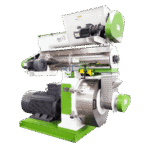
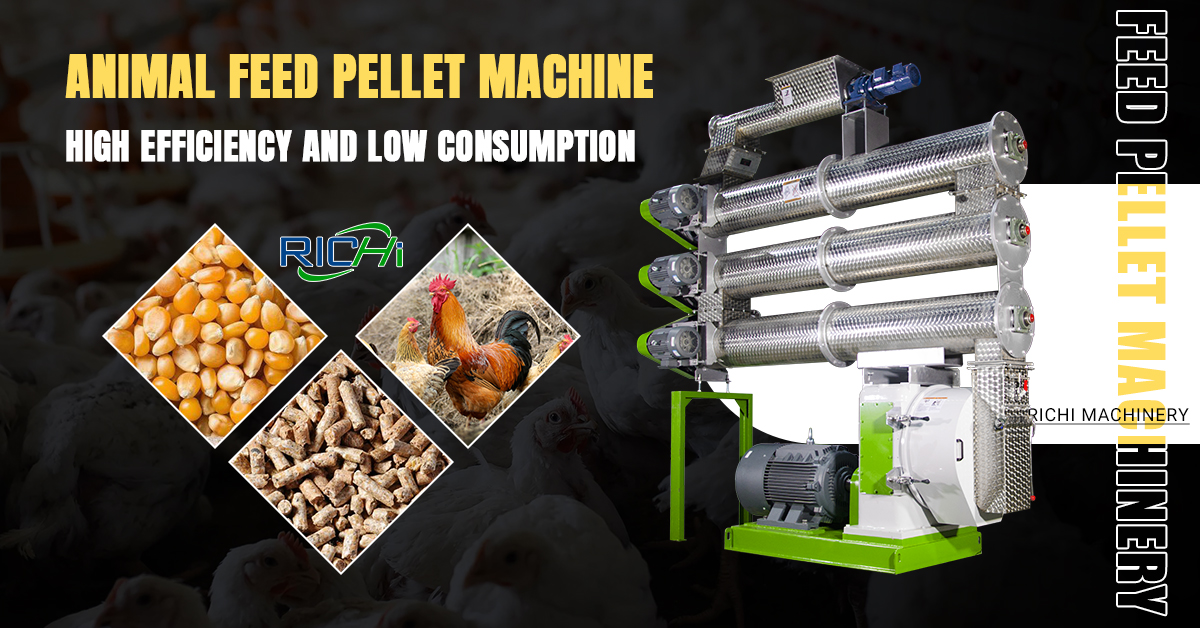
The conditioned material is compressed through a die by rollers, forming cylindrical pellets of uniform size. Pellet diameter and length can be adjusted to meet different animal feeding requirements.
Modern pellet mills, including those produced by manufacturers such as RICHI, are designed to operate continuously with high output and stable performance, supporting both medium- and large-scale feed production facilities.
Cooling, Screening, and Packaging
After pelleting, hot pellets must be stabilized before storage or distribution.
Cooling
Pellets exiting the pellet mill contain residual heat and moisture. Cooling systems reduce pellet temperature and moisture content, preventing mold growth and structural damage.
Screening
Screens separate fines and broken pellets from finished products. Recovered fines are typically recycled back into the production process to minimize material loss.
Packaging and Storage
Finished pellets can be packed into bags or transported in bulk. Proper packaging ensures product integrity during transportation and storage.
Common Raw Materials Used in Feed Pellet Production
Feed pellet production lines are designed to process a wide variety of raw materials, including:
Corn and wheat as energy sources
Soybean meal and rapeseed meal as plant protein sources
Fish meal and meat meal as animal protein sources
Oils and fats for energy density
Vitamin and mineral premixes for balanced nutrition
The flexibility of the production line allows feed manufacturers to adapt formulations based on regional availability and cost considerations. Sites
Applications Across Animal Industries
Feed pellet production lines serve multiple sectors within animal agriculture.
Livestock Feed
Pelleted feed is widely used for cattle, sheep, goats, and pigs due to its ease of handling and improved feed intake efficiency.
Poultry Feed
Uniform pellets and crumbles ensure consistent nutrition for broilers, layers, and breeders, supporting fast growth and egg production.
Aquaculture Feed
Specialized feed pellet production lines can produce sinking or floating pellets for fish and shrimp, depending on formulation and processing technology.
Advantages of Using a Feed Pellet Production Line
The adoption of a feed pellet production line offers several advantages:
Improved feed utilization and reduced waste
Enhanced storage and transportation efficiency
Better control over feed formulation and quality
Increased production capacity with reduced labor requirements
Compliance with modern feed safety and hygiene standards
These benefits make feed pellet production lines a cornerstone of modern feed manufacturing.
Global Distribution and Market Trends
Feed pellet production lines are used globally, with significant adoption in Asia, Europe, Africa, and the Americas. Rapid growth in animal protein consumption has driven demand for industrial feed production, particularly in developing economies.
Technological innovation continues to shape the market, with trends focusing on automation, energy efficiency, and environmental sustainability. Companies like RICHI Manufacture contribute to this evolution by offering customizable feed pellet production line solutions for diverse production needs.
Maintenance and Operational Considerations
Regular maintenance is essential for ensuring long-term performance of a feed pellet production line. Key considerations include:
Routine inspection of pellet mill dies and rollers
Proper lubrication of moving components
Monitoring of conditioning temperature and moisture
Timely replacement of wear parts
Well-maintained systems can operate reliably for many years with consistent output quality.
Environmental and Sustainability Aspects
Modern feed pellet production lines are increasingly designed with sustainability in mind. Efficient energy use, reduced dust emissions, and optimized material utilization help minimize environmental impact.
The ability to process agricultural by-products and alternative protein sources further supports sustainable feed manufacturing practices.
Conclusion
A feed pellet production line represents a vital technological solution in contemporary animal agriculture. By integrating mechanical processing with nutritional science, it enables efficient, scalable, and consistent feed production. As global demand for animal products continues to rise, feed pellet production lines will remain essential infrastructure supporting food security and agricultural development. Alfalfa pellet production line in argentina