Wood pellets have become one of the most sought-after renewable fuel products globally, used in residential heating, commercial boilers, and large-scale power generation. Yet for many people considering entry into this market — or simply curious about the process — one fundamental question persists: how do you make wood pellets? This guide answers that question comprehensively, walking through each stage of the production process and explaining the role of the sawdust pellet maker in converting raw wood waste into a high-value fuel product.
What Is a Sawdust Pellet Maker?
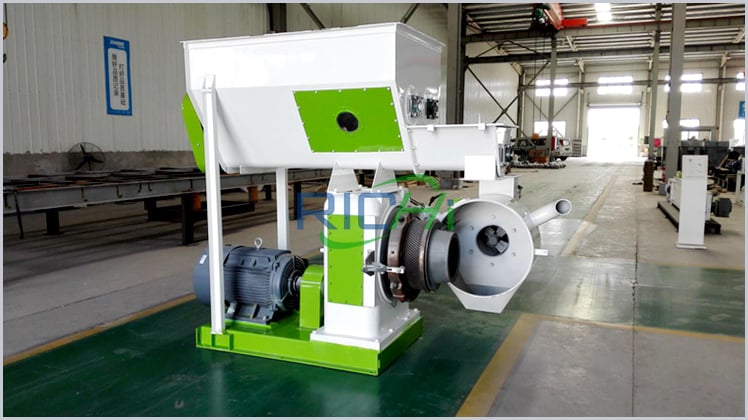
A sawdust pellet maker is a specialized pelletizing machine designed to process fine wood particles — primarily sawdust, wood shavings, and sanding dust — into compact cylindrical pellets. Sawdust is one of the most ideal raw materials for pellet production because its fine particle size often eliminates the grinding stage required for coarser feedstocks, reducing equipment investment and energy consumption.
Sawdust pellet makers are available in flat die and ring die configurations. For small workshops or farms generating modest quantities of sawdust, flat die units offer an affordable entry point. For larger sawmill operations or dedicated pellet production businesses, ring die machines provide the throughput and pellet consistency needed for commercial viability.
How Do You Make Wood Pellets? The Step-by-Step Process
Understanding how do you make wood pellets requires examining each stage of the production workflow:
Step 1: Raw Material Collection and Assessment The process begins with sourcing and assessing sawdust or other wood residues. Key parameters to evaluate include moisture content, particle size distribution, species type, and contamination levels (bark content, metal particles, grit). Clean, consistent feedstock produces higher-quality pellets and reduces machine wear.
Step 2: Size Reduction (If Required) Sawdust typically does not require grinding since it is already fine enough for pelletization. However, if the raw material includes wood shavings, chips, or larger offcuts, a hammer mill is used to reduce particle size to below 4–5 mm. This ensures uniform compression in the die chamber.
Step 3: Drying This is frequently the most energy-intensive stage. Sawdust from freshly cut timber can have moisture content of 40–60%, far above the 10–15% target for efficient pelletization. Rotary drum dryers, belt dryers, or flash dryers are used depending on the volume and moisture level of the feedstock.
Proper drying is critical to pellet quality. Over-dried material (below 8% moisture) becomes overly brittle and abrasive; under-dried material produces soft, crumbling pellets with poor durability indices.
Step 4: Pelletizing with the Sawdust Pellet Maker Pre-conditioned sawdust enters the sawdust pellet maker through a feed inlet and is evenly distributed across the die surface by a spreading device. The rotating rollers compress the material through the die holes, generating frictional heat that activates the wood’s natural lignin binder. Pellets emerge from the opposite face of the die and are cut to length by a fixed knife.
For comprehensive guidance on machine settings, die selection, and troubleshooting, operators should look here at technical documentation and support materials provided by their equipment manufacturer — these resources are invaluable during initial commissioning and when adapting the machine to new feedstock types.
Step 5: Cooling Freshly formed pellets are hot (70–90°C) and slightly soft. They must pass through a counterflow cooler where ambient air circulates through the pellet bed, reducing temperature to within 3–5°C of ambient. This process also reduces moisture content by 1–3 percentage points, improving the final pellet’s density and durability.
Step 6: Screening After cooling, pellets pass over a vibrating screen to separate fines (broken pellets and dust) from finished product. Fines are typically recycled back into the pellet maker feed, minimizing material waste.
Step 7: Packaging and Storage Finished pellets are packaged in bags (typically 15 kg for retail or 1,000 kg big bags for bulk) or stored in silos for bulk delivery. Proper storage is essential — pellets absorb moisture from the atmosphere, which can degrade their quality and calorific value if not managed correctly.
Expert Guidance from Richi Machinery Manufacture
Navigating all these stages successfully requires both the right equipment and the right knowledge. Richi machinery manufacture has supported thousands of pellet production projects globally, offering not just machines but complete process engineering — from raw material analysis and equipment selection to installation supervision and operator training.
Their technical team can help answer the question of how do you make wood pellets in the context of your specific feedstock, facility, and production targets — translating general process knowledge into a customized, actionable production plan.
For anyone starting a new pellet production project or optimizing an existing one, it is strongly recommended to look here at the detailed resources and case studies published by experienced manufacturers like Richi machinery manufacture, which provide real-world insights that generic guides cannot replicate.
Conclusion
The question of how do you make wood pellets has a clear, structured answer — one that begins with quality raw materials and ends with a reliable sawdust pellet maker at the center of a well-designed production line. By following each step with precision and partnering with an experienced manufacturer like Richi machinery manufacture, businesses can build pellet production operations that are efficient, scalable, and commercially successful.
https://www.richimanufacture.com/biomass-pellet-making-machine/