For most farmers, straw is an afterthought. The grain is the crop. The straw is just what’s left over—something to be baled if there’s time, burned if there’s not, or left in the field to decompose. It’s bulky, awkward to handle, and not worth much in most markets. Or so the thinking goes.
But a growing number of farmers are looking at that same straw and seeing something else entirely. They see energy. They see a product that can be sold, not disposed of. They see an opportunity to turn what was once a cost center into a revenue stream. The difference isn’t the straw. It’s how they handle it.
The key is pelleting. When straw is compressed into dense, uniform pellets, it changes from a bulky nuisance into a clean, consistent fuel or feed product. The volume shrinks by 70% to 80%. The handling becomes simple. The market opens up. And the straw that used to be a problem becomes an asset.
What Straw Actually Is
Straw is the stalk portion of cereal crops—wheat, barley, oats, rice, and others. It’s the structural part of the plant that’s left after the grain has been harvested. By weight, a typical wheat crop produces about as much straw as it does grain. That’s a lot of material.
The composition of straw varies by crop, but the main components are cellulose, hemicellulose, and lignin. These are the same structural polymers that make up wood. They contain energy. When burned, straw releases that energy as heat.
The problem with straw is physical. It’s light, bulky, and awkward. A ton of loose straw fills about eight cubic meters of space. It doesn’t flow well in handling equipment. It’s difficult to store. And it’s expensive to transport because a truckload of loose straw contains very little weight for the volume it takes up.
These physical properties are what make straw unappealing as a fuel or feed in its raw form. But pelleting changes all of that.
How Pelleting Changes the Equation
When straw is pelleted, the material is ground to a uniform particle size, conditioned with steam, and compressed through a die. The pressure and heat melt the natural lignin, which acts as a binder. The result is a dense, uniform pellet that can be handled like any other granular material.
The volume reduction is dramatic. A ton of straw pellets occupies about one cubic meter of space—one-eighth the volume of loose straw. This means it can be stored in standard bins or silos. It can be transported economically. It flows through feeders and handling systems without bridging or clogging.
The pellets burn efficiently. The density prevents them from blowing away in a furnace. The uniform size allows for controlled combustion. The moisture content is low, so energy isn’t wasted evaporating water. The result is a clean, consistent fuel that can replace fossil fuels in many applications.
For farmers who currently pay to have straw removed, or who burn it in the field, pelleting offers a different path. The material that was a cost becomes a product. And the product has real market value.
The Equipment That Makes It Possible
The conversion of straw into pellets requires specialized equipment. The straw must be ground, conditioned, and compressed. Each step affects the quality of the final product.
Grinding is the first step. A hammer mill or tub grinder reduces the straw to a consistent particle size. For straw, the target particle size is typically 3 to 5 millimeters. The grinding must be consistent to ensure smooth feeding through the pellet mill and uniform pellet quality.
Conditioning follows grinding. The ground material is treated with steam to soften the fibers and activate the natural binders. The temperature and moisture are controlled to achieve the optimal condition for pelleting. Proper conditioning is essential for producing durable pellets.
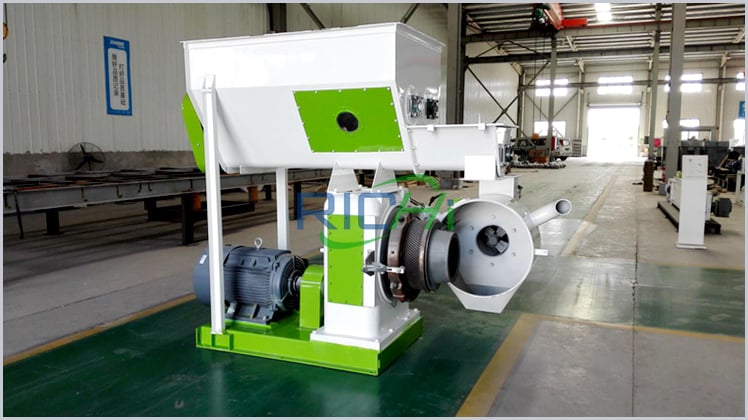
The actual pelletizing is performed by a straw pelleting machine. This equipment compresses the conditioned material through a die. The die hole diameter determines the pellet size. For straw, pellet sizes typically range from 6 to 10 millimeters, depending on the application.
The straw pelleting machine must be built to handle the abrasive nature of straw. The die and rollers are made from wear-resistant alloys. The bearings are sealed against contamination. The motor is sized for the load. A well-built machine can run for thousands of hours with proper maintenance.
The Scale Question
The right scale for a straw pelleting operation depends on the volume of straw available and the intended market.
A small machine, producing 200 to 500 kilograms per hour, might be suitable for a farm that wants to process its own straw for heating. The investment is modest, and the payback comes from reduced heating costs and avoided disposal expenses.
A larger machine, producing several tons per hour, is needed for commercial production. These machines are typically ring-die designs, built for continuous operation. They can run around the clock, producing pellets for the industrial fuel market or for export.
The investment in a larger machine is significant, but the economics reflect the scale. The per-ton cost of production decreases as the volume increases. For operations with consistent straw supply and access to markets, the larger scale can be profitable.
What the Pellets Are Used For
Straw pellets have several applications. The primary market is fuel. Straw pellets can be burned in pellet stoves, boilers, and industrial furnaces. They provide heat for homes, greenhouses, and commercial buildings. They can also be used in combined heat and power systems.
The fuel market for straw pellets is well-established in Europe, where agricultural biomass is used extensively for heating. The market in North America is growing, driven by interest in renewable energy and the need to reduce reliance on fossil fuels.
Straw pellets also have feed applications. Processed straw can be included in ruminant rations as a source of fiber. The pelleting process improves digestibility somewhat, making the straw more valuable as feed.
There’s also a market for straw pellets as animal bedding. The absorbent nature of straw makes it suitable for livestock bedding. Pelleted straw is easier to handle and store than loose straw, and it produces less dust.
The Economics
The decision to invest in a straw pelleting line is ultimately about economics. The value of the pellets must exceed the cost of production. For many operations, it does.
The key factors are the cost of the raw material, the energy cost of drying and pelleting, and the market price for the finished pellets.
In many cases, the straw itself has little or no value. It’s a byproduct that the farm is already producing. The alternative is disposal, which may involve labor, equipment, and possibly fees. Using the straw for pelleting captures value that would otherwise be lost.
The energy cost of pelleting is significant. Drying and compression both consume energy. For straw that’s properly dried, the energy cost can be a large portion of the total production cost. But the value of the finished pellets typically exceeds the energy cost.
The market price for straw pellets varies by region and by application. Fuel pellets typically sell for $100 to $250 per ton, depending on the quality and the market. Bedding pellets command similar prices. For operations with low-cost straw and efficient production, the margin is attractive.
Richi Manufacture has experience in designing systems for straw pelleting. The equipment is built to handle the unique challenges of straw—the fiber, the abrasiveness, the variability. The engineering takes into account the specific requirements of the material and the intended application.
The support extends beyond the equipment itself. Installation, training, and after-sales assistance help operators achieve consistent results. The availability of genuine parts ensures long-term reliability.
The Practical Reality
Producing straw pellets is not a get-rich-quick proposition. It requires an investment in equipment, a reliable supply of straw, and access to a market for the finished pellets. But for farmers who have straw in abundance and need to manage it anyway, pelleting offers a way to add value.
The first step is understanding the straw resource. How much is available? What is its moisture content? Is it consistent in quality? The answers to these questions will determine the scale of the operation and the type of equipment needed.
The next step is evaluating the market. Who will buy the pellets? What specifications do they require? What price will they pay? Understanding the market helps define the product characteristics and the production requirements.
The final step is selecting the equipment. The straw pelleting machine should be matched to the straw characteristics and the production goals. The supporting equipment—grinder, dryer, cooler, screener—should be sized for the throughput.
For more detailed information on equipment options and system design, click to investigate the resources available. The technology is proven, and the market for straw pellets is growing. For farmers with straw to manage, pelleting offers a practical way to turn a byproduct into a product.

