Start With the Business Model
A new cat litter factory begins with a commercial objective, not an equipment list. The investor needs to understand which products the market requires, which raw materials are locally available, and how finished litter will reach customers. These decisions determine the necessary capacity, production route, storage requirements, and packaging format.
A cat litter pellet machine may be central to the process, but the factory also needs a reliable way to prepare ingredients, manage moisture, transfer material, and inspect finished pellets. Purchasing the main machine before establishing these requirements can lead to unnecessary equipment changes or capacity imbalances later.
The first planning stage should define the intended product range. A facility making mineral litter will have different process requirements from one focused on soybean residue, wood fiber, or recycled paper. A mixed-product business must also consider cleaning, recipe changes, and the possibility that different products need separate handling arrangements.
Converting Project Requirements into an Engineering Plan
Define Capacity and Operating Hours
The planned hourly output should be connected to expected annual sales and realistic operating hours. A factory operating one shift has different requirements from a plant designed for continuous production. Maintenance, cleaning, staff training, and material delivery interruptions should be included when calculating usable capacity.
A turnkey cat litter plant solution should translate these commercial assumptions into an equipment arrangement. The engineering plan should identify the main processing stages, the capacity required at each stage, and the physical connections between machines. It should also address utilities, electrical requirements, access for maintenance, and the movement of raw materials and finished products.
Capacity must be balanced throughout the plant. A large pelleting machine cannot compensate for inadequate drying capacity or insufficient packaging speed. The same principle applies to raw material preparation: a grinder that produces material too slowly can restrict the output of every downstream operation.
Plan the Factory Layout Early
The building layout influences installation cost, material movement, safety, and future maintenance. Engineers should consider where raw materials arrive, how they are stored, where dust-producing operations are located, and how finished products move to dispatch.
Maintenance access is often overlooked during early planning. Machines need space for opening inspection doors, removing worn components, and lifting heavy parts. If access is restricted, routine work can become slower and more expensive. The layout should also separate pedestrian movement from equipment transfer routes where practical.
Electrical cabinets, ventilation, dust collection, drainage where required, and fire-safety provisions should be assessed according to local regulations and the actual material-handling risks. These requirements should be resolved before equipment installation begins.
Integrating the Main Processing Stages
Preparation, Mixing, and Forming
Raw material preparation may involve shredding, crushing, grinding, screening, and moisture adjustment. The selected equipment depends on the material supplied to the factory. Wood processing residues may require size reduction, while certain mineral powders may arrive in a form that needs less extensive preparation.
Mixing ensures that formulation ingredients are distributed consistently. The prepared mixture then enters the forming stage, where the die, rollers, feed system, and cutter must match the recipe and target pellet dimensions. A successful project considers these components as an integrated process rather than selecting each machine in isolation.
Drying, Cooling, and Screening
The post-forming process depends on the product. Some plant-based formulations require carefully managed drying, while mineral materials may follow different conditions. Dryer selection should consider material sensitivity, initial moisture, target moisture, and required throughput.
Cooling and screening help prepare pellets for storage and packaging. Newly formed material may retain heat or moisture, and size classification helps remove broken or irregular pieces. Where process conditions permit, clean off-size material can be returned for reprocessing under defined controls.
The project should specify how material moves between stages and what happens when one machine stops. Buffers, bypass arrangements, and appropriate controls can reduce the impact of interruptions, although their usefulness depends on the plant’s scale and process design.
Evaluating Suppliers and Project Responsibilities
A turnkey proposal should clearly state which activities the supplier performs and which remain the investor’s responsibility. Equipment supply, engineering, installation guidance, commissioning, training, and after-sales support may be included in different combinations. Buyers should confirm these details before comparing quotations.
An independent article source may offer background on equipment technologies, but project specifications should be confirmed directly with the supplier and checked against the factory’s actual requirements. Relevant documentation includes equipment drawings, motor lists, utility needs, operating instructions, spare-parts recommendations, and acceptance criteria.
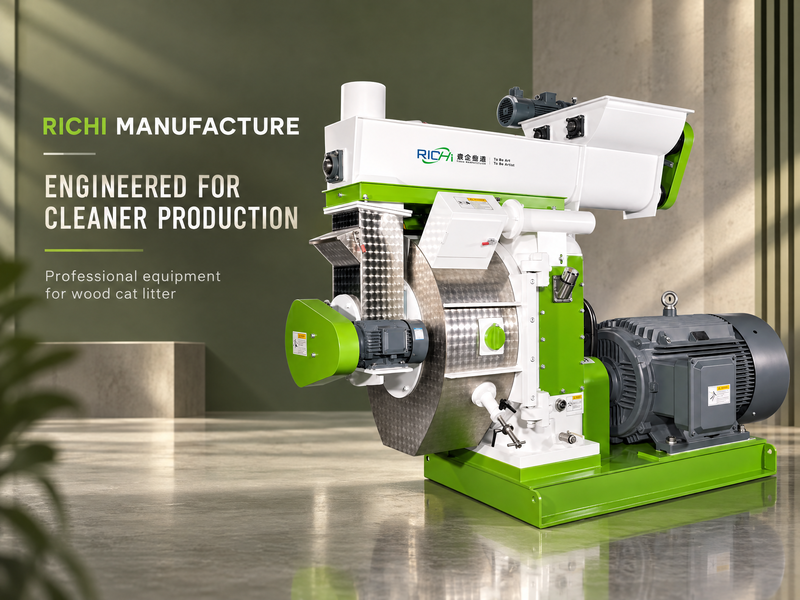
The main pellet mill deserves particular attention because wear parts, drive components, die specifications, and maintenance procedures affect operating continuity. The investor should understand the expected maintenance tasks and whether the required replacement parts can be obtained within an acceptable timeframe.
Commissioning and Performance Verification
Installation is not the end of a project. Commissioning should confirm that equipment operates safely, material transfers correctly, and the line can produce the required product. Initial trials should use representative raw materials and the intended formulation whenever possible.
Acceptance criteria should be agreed upon before testing. These may cover output rate, pellet dimensions, product moisture, breakage, operating stability, and other relevant quality parameters. Results should be recorded so that any shortfall can be investigated systematically.
Operators need practical training in startup, shutdown, cleaning, routine inspection, and troubleshooting. A factory that receives machinery without adequate operational preparation may struggle even when the equipment itself is correctly specified.
Conclusion: Treat the Plant as One Investment
A successful cat litter factory requires coordination between business planning, process engineering, machinery, building infrastructure, and operational training. A turnkey approach can simplify project coordination when responsibilities and performance expectations are clearly defined. By resolving these issues before installation, investors can reduce avoidable changes and establish a more dependable route from raw material to finished litter.
View details: https://www.richimanufacture.com/cat-litter-pellet-machine/